Choose a Location:
48 sv medical call

Your Brain Deserves Timely Care.

Experiencing persistent headaches, memory problems, tremors, or other concerning changes? Don’t wait.

0824-2276633

0824-4293333

+91 93434 42488

Stroke Prevention

Looking to assess your stroke risk?

Understanding Stroke Treatment in Mangalore

 stroke happens when blood flow to part of the brain is blocked or when a blood vessel in the brain bleeds. Both types need urgent medical assessment, but they are treated differently. A scan helps the care team identify the type of stroke and decide what treatment is appropriate.

If someone develops sudden weakness or numbness, facial drooping, trouble speaking, a change in vision, or loss of balance, seek emergency care immediately. Note when the symptoms began or when the person was last known to be well. Do not wait to see whether the symptoms pass, and do not give food, drink, or medication unless a clinician advises it

The Role of an Interventional Neuroradiologist and Stroke Team

Stroke care involves more than one specialist. Emergency and neurology teams assess symptoms and imaging; an interventional neuroradiologist may perform a catheter-based procedure when it is suitable. Neurosurgery and neuro-intensive care teams may also be involved, depending on the type and severity of the stroke.

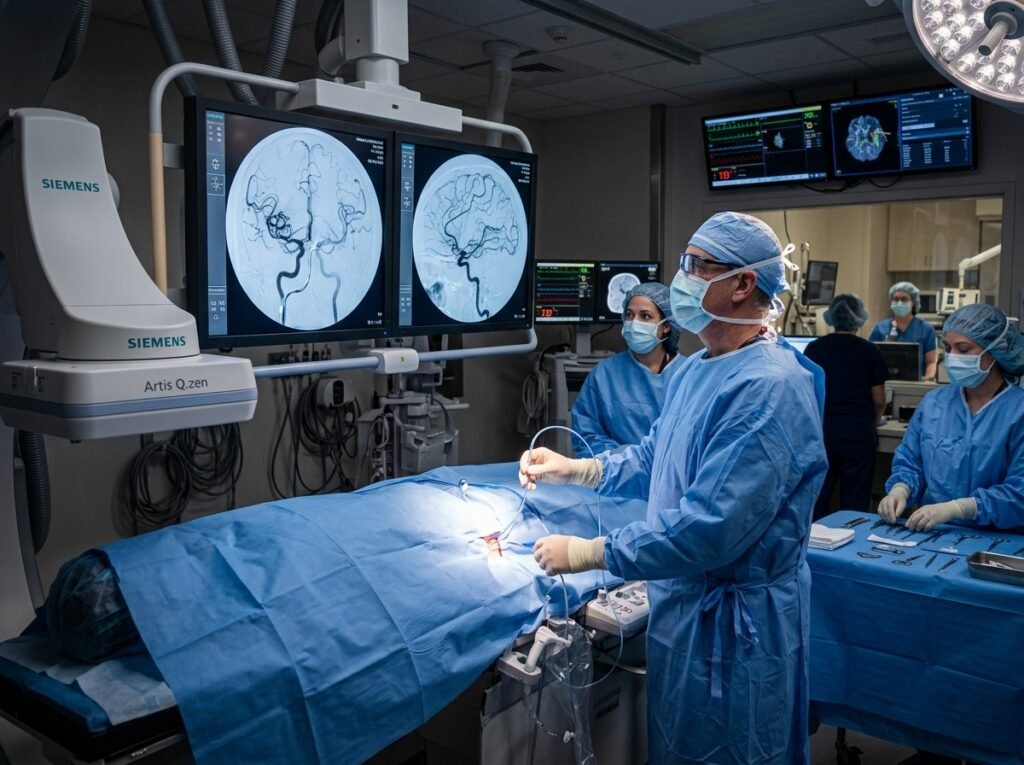
Mechanical thrombectomy is one such procedure. A specialist guides a catheter through a blood vessel to reach and remove a clot in a large brain artery. It is considered only for selected patients after clinical assessment and imaging. The stroke team explains the options and risks for the individual case. First Neuro’s neurology service and neurosurgery service are part of the hospital’s brain and spine care services.

Why Trust First Neuro?

First Neuro’s service information describes a 24/7 stroke helpline, a biplane cath lab, neuro-intensive care and stroke rehabilitation. These services support different stages of care, from emergency assessment to recovery after the immediate stroke has been managed.

The hospital also lists World Stroke Organization (WSO) Angels Diamond Status among its stroke-care credentials. Recognition does not predict an individual patient’s outcome. Treatment choices depend on the stroke type, the person’s condition, imaging findings and clinical assessment. After the acute phase, some patients may benefit from a rehabilitation plan. First Neuro’s neuro-rehabilitation service describes support for mobility, communication, swallowing and daily activities.

Stroke Treatment Services

Hyper-Acute Care
Intravenous Thrombolysis
For some ischemic strokes, clinicians may consider clot-dissolving medication after reviewing brain imaging, symptom timing and the patient's medical history. It is not appropriate for every stroke, including many strokes caused by bleeding.
Endovascular Revascularization
Mechanical Thrombectomy
This catheter-based procedure may be an option for selected ischemic strokes caused by a large artery blockage. Imaging and specialist assessment help determine whether it is appropriate; eligibility and timing vary from patient to patient.
Critical Neuro-Care
Neuro-ICU & Surgery
Some patients need close monitoring or an operation because of bleeding, swelling or other complications. The neuro-intensive care and neurosurgery teams assess each case and recommend care based on the patient's condition.
Functional Recovery
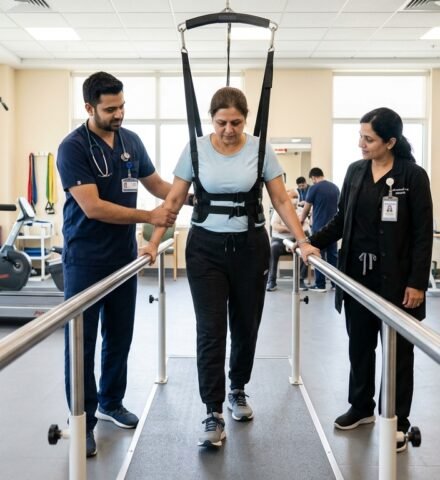
Comprehensive Stroke Rehab
After the patient is medically stable, rehabilitation may help address changes in movement, speech, swallowing or everyday activities. The team adapts the plan to the person's needs and recovery goals.

Frequently Asked Questions: Best Neuropathology in Mangalore

What are the warning signs of a stroke?

BE-FAST is a reminder of possible stroke signs: Balance problems, Eye or vision changes, Facial drooping, Arm weakness, and Speech difficulty. Time means acting quickly. Call emergency services promptly; do not wait to see if symptoms improve. First Neuro lists a 24/7 stroke helpline at +91 93434 42488.

Seek emergency care immediately and note when the symptoms started or when the person was last well. Do not give food, drink or medication unless a clinician advises it. The treatment team needs to establish whether the stroke is caused by a blockage or bleeding before choosing treatment.

Mechanical thrombectomy is a catheter procedure to remove a clot from a large brain artery. It may be considered for selected ischemic strokes after imaging and specialist assessment. It is not suitable for every patient.

Insurance coverage and cashless approval depend on the policy, insurer and treatment. Contact the hospital’s admission or insurance desk to check current empanelment and requirements for a specific plan.